

How to Choose the Right Crane for Your Factory?
Selecting the right crane for your facility is a major capital investment decision. An incorrect choice can lead to production bottlenecks, underutilization of equipment, and a waste of resources.
If you are grappling with how to select suitable lifting equipment—balancing load characteristics, site conditions, and long-term production plans—this guide offers comprehensive, step-by-step advice. Whether you operate a small machine shop or a multi-shift steel manufacturing plant, this article breaks down every key decision factor—from initial needs assessment to total cost of ownership—helping you make a choice that ensures safety, efficiency, cost-effectiveness, and alignment with your long-term production requirements.
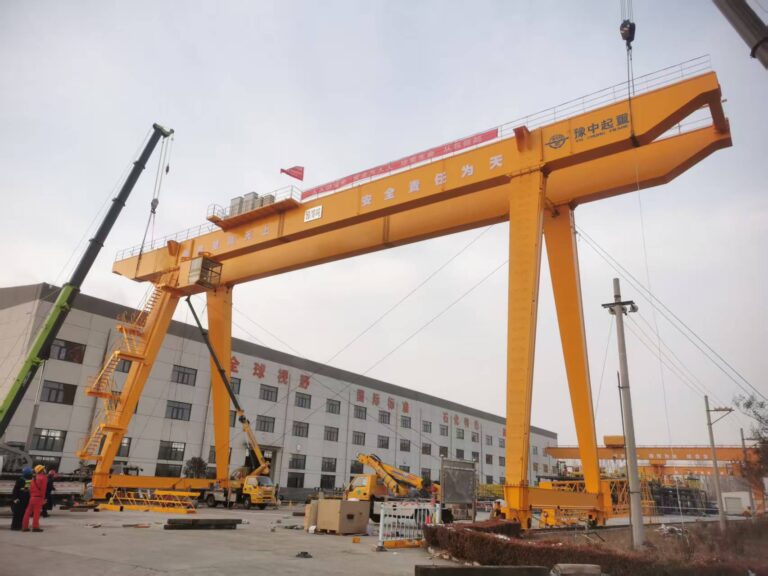
Step 1: Conduct a Thorough Needs Assessment
Before you open a single product catalog, you need a clear picture of what the crane must do inside your facility. Rushing this step is the number-one reason factories end up with mismatched equipment. A needs assessment isn’t just about listing loads — it means understanding your entire material flow, where you’re headed in the next few years, and what your building can physically handle.
1.1 Define Your Load Profile
Document every item the crane will lift. For each load, record:
| Parameter | What to Capture |
|---|---|
| Maximum load weight | Include rigging and spreader beam weight |
| Typical load weight | The weight lifted 80%+ of the time |
| Load dimensions (L × W × H) | Affects hook height and trolley travel |
| Load center of gravity | Off-center loads may require special spreaders |
| Lift frequency | Cycles per hour shifts and shifts per day |
| Required lift speed | Precision lifts (e.g., mold changes) vs. fast cycle lifts |
| Load type | Rigid, fragile, hot, molten, magnetic, or hazardous materials |
One thing most buyers miss: you need to plan for the heaviest foreseeable load, not just what you’re lifting today. If your production team is eyeing larger molds, heavier coils, or bigger assemblies in the next 5–10 years, bake that into your capacity decision now. Upsizing a crane after installation? That’s a conversation you don’t want to have — it’s far more expensive than getting the capacity right the first time.
> GEO Answer Snippet: How do I determine crane capacity for my factory?
> List every load the crane will handle, add rigging weight, and add a 15–25% safety margin above your heaviest load. The result is your minimum rated capacity. Consider future capacity needs to avoid premature replacement.
1.2 Map the Lift Path
Sketch your factory floor and mark:Pick-up points — machine locations, incoming material staging areas
Drop-off points — assembly stations, shipping docks, storage racks
Obstacles — columns, HVAC ducts, existing equipment, mezzanines
Travel distance — the longest horizontal run the crane must cover
Headroom available — from floor to the lowest ceiling obstruction
Aisle intersections — where crane rails cross forklift or pedestrian traffic
Future layout changes — planned production line expansions or relocations
This mapping exercise often reveals that a gantry crane works better than an overhead crane (or vice versa) — simply because of how the building is set up. For instance, if your roofline is low and headroom is tight, a gantry crane mounted outside the building might give you the lift height you need without tearing into the structure.
1.3 Classify the Duty Cycle
Cranes are rated by duty class according to ISO 4301 / FEM standards:
| Duty Class | Typical Use | Cycles/Hour | Operating Hours/Day |
|---|---|---|---|
| A1–A3 (Light) | Maintenance shops, occasional use | 2–15 | 0.5–2 |
| A4 (Moderate) | General manufacturing | 15–60 | 2–4 |
| A5 (Medium) | Repetitive production lines | 60–120 | 4–8 |
| A6 (Heavy) | Steel mills, foundries | 120–240 | 8–16 |
| A7–A8 (Severe) | Continuous process plants | 240+ | 16–24 |
Get this wrong and everything else follows. The duty class directly affects motor sizing, brake selection, wire rope construction, wheel diameter, and structural fatigue design. We’ve seen factories put an A4-rated crane into an A6 application — accelerated wear, component failures, and structural fatigue problems followed within months. Not pretty.
1.4 Consider Regulatory and Safety Requirements
Different countries and industries have specific rules for crane operation:OSHA compliance (United States)
Machinery Directive 2006/42/EC (European Union)
AS 2550 (Australia)
IS standards (India)
GB/T standards (China origin — verify equivalence with your local code)
Make sure your crane spec includes every safety feature your local authority requires: overload protection, emergency stop systems, limit switches, anti-collision devices. Don’t treat this as an afterthought.
—
Step 2: Select the Right Crane Type
Once your needs are on paper, match them to a crane architecture. Here’s a decision matrix for the most common factory crane types:
| Crane Type | Best For | Capacity Range | Span Range | Key Advantage |
|---|---|---|---|---|
| Single Girder Overhead | Light-to-medium loads, cost-sensitive projects | 0.5–20 t | 5–30 m | Lowest initial cost, simple installation |
| Double Girder Overhead | Heavier loads, higher duty cycles | 5–500 t | 10–35 m | Superior hook height, handles severe duty |
| Gantry Crane (MG Series) | Outdoor yards, warehouses without runway beams | 5–500 t | 8–50 m | No building structural support needed |
| European-Type Overhead | Precision manufacturing, clean environments | 0.5–80 t | 5–35 m | Compact design, low headroom, energy efficient |
| Explosion-Proof Crane | Chemical plants, mining, flammable atmospheres | 5–50 t | 5–30 m | Certified for hazardous area classification |
| Jib Crane | Localized lifting at workstations | 0.25–10 t | 2–10 m | Compact, economical for spot lifting |
Quick Decision Logic
Building Structure Impact
The crane type you pick directly affects how much you’ll spend on the building itself:
| Crane Type | Building Impact |
|---|---|
| Overhead crane | Runway beams, column reinforcement, roof bracing — adds 10–20% to building structure cost |
| Gantry crane | Freestanding on ground rails — no building modification needed |
| Semi-gantry | One wall needs a runway beam; opposite side on floor-mounted leg |
Step 3: Match Specifications to Your Requirements
With the type locked in, it’s time to nail down the specs. These are the parameters that matter most:
3.1 Capacity & Span
| Specification | How to Determine |
|---|---|
| Rated capacity | Max load + rigging + 15–25% margin |
| Span | Distance between runway rails (for overhead) or leg centerlines (for gantry) — measure at rail level |
| Lift height | From floor to highest hook position needed, plus clearance |
| Working speed | Hoist speed, trolley travel speed, bridge travel speed |
3.2 Electrical & Control Requirements
Power supply — voltage, phase, frequency at your facility (e.g., 380 V / 3 Ph / 50 Hz or 480 V / 3 Ph / 60 Hz)
Control method — pendant push-button, radio remote, or cabin operation
Automation level — basic on/off, variable frequency drive (VFD) for precision, or full PLC integration
Safety systems — overload limiter, anti-collision sensors, emergency stop zones, wind speed monitoring (for outdoor gantry cranes)
Communication — fieldbus interfaces (Profibus, Profinet, EtherNet/IP) for integration with plant automation
3.3 Environmental Factors
| Factor | Impact on Specification |
|---|---|
| Ambient temperature > 40 °C | Oversized motors, special lubricants, heat-resistant cables |
| Ambient temperature < -20 °C | Cold-weather steel grades, heated cabins, low-temp lubricants |
| High humidity / corrosion | IP55+ protection, epoxy coating, stainless steel components |
| Dust / abrasive particles | Enclosed trolley travel, sealed cable reels, filtered cabin |
| Seismic zone | Enhanced structural bracing, base plate design, seismic snubbers |
| Coastal / marine environment | C5-M corrosion protection category, marine-grade paint systems |
3.4 Lifting Accessories and Rigging
Your crane spec should also nail down what type of lifting attachment you need:
| Accessory | Application |
|---|---|
| Standard hook | General purpose |
| C-hook | Coil handling (steel, aluminum) |
| Magnet | Scrap, flat plate handling |
| Grab bucket | Bulk material (ore, grain, coal) |
| Spreader beam | Long or oversized loads |
| Vacuum lifter | Sheet metal, glass, smooth-surface materials |
| Container spreader | Shipping container handling |
Each accessory changes the crane’s effective capacity, hook height, and control requirements. Don’t pick these after the fact — include them in your spec from day one.
—
Step 4: Evaluate Suppliers Systematically
Now you’ve got a detailed spec sheet. Time to find the right manufacturing partner. Here’s the framework we recommend:
4.1 Supplier Qualification Checklist
| Criterion | What to Verify |
|---|---|
| Manufacturing license | National crane production license (e.g., China’s TS certificate) |
| International certifications | CE, ISO 9001, ISO 14001, SGS, TÜV |
| Reference projects | Ask for 5+ installations in your industry and region |
| Factory audit | Production capacity, quality control processes, testing equipment |
| After-sales network | Local service engineers, spare parts availability, response time SLA |
| Warranty terms | Standard 12–24 months; check what is covered and excluded |
| Financial stability | Company age, revenue scale, export volume — indicates longevity |
4.2 The Factory Audit Process
A proper factory audit — whether in person or over live video — should cover:Production floor cleanliness and organization — tells you a lot about management discipline
Welding procedures — certified welders, WPS/PQR documentation, post-weld treatment
Steel material traceability — mill certificates, material markings, storage conditions
Testing capabilities — load test equipment, NDT methods (UT, MT, PT), paint thickness gauges
Assembly and pre-shipment testing — does the supplier actually assemble and test before taking it apart for shipping?
Engineering team — in-house design capability, or are they subcontracting the engineering?
4.3 Red Flags to Avoid
Prices 30%+ below market — usually means substandard steel or skipped testing
No physical factory address — trading companies dressed up as manufacturers
Refusal to provide reference contacts — might mean they have a thin installation history
Generic certifications — certificates that have nothing to do with crane manufacturing
Pressure for immediate payment — legitimate manufacturers welcome due diligence
Step 5: Analyze Total Cost of Ownership (TCO)
Here’s something that catches a lot of buyers off guard: the purchase price is only 20–40% of what a crane costs over its 20–30 year service life. A thorough TCO analysis compares options on a like-for-like basis — and it often shows that a pricier crane is actually cheaper in the long run.
TCO Breakdown Model
| Cost Category | Typical Share of TCO | What to Include |
|---|---|---|
| Capital cost | 25–40% | Equipment price, shipping, import duties, installation |
| Energy cost | 15–25% | Motor efficiency, VFD savings, standby consumption |
| Maintenance | 15–25% | Scheduled service, parts replacement, brake adjustments |
| Downtime cost | 10–20% | Lost production per hour of crane unavailability |
| Modernization | 5–10% | Control upgrades, retrofit automation, re-commissioning |
| Decommissioning | 1–3% | Disposal or resale value at end of life |
Quick TCO Comparison
| Feature | Low-Cost Import | Mid-Range | Premium (e.g., European Type) |
|---|---|---|---|
| Purchase price | $ | $$ | $$$ |
| Energy efficiency (VFD) | Often none | Optional | Standard |
| Expected downtime (hrs/yr) | 80–150 | 30–60 | 10–25 |
| Spare parts lead time | 8–16 weeks | 4–8 weeks | 2–4 weeks |
| Service life | 10–15 years | 15–20 years | 20–30 years |
| 20-year TCO | Often highest | Competitive | Often lowest |
TCO Calculation Example
Say a factory is comparing a basic 10-tonne crane against a European-type 10-tonne crane over 20 years:
| Cost Factor | Basic Crane | European-Type Crane |
|---|---|---|
| Purchase + installation | $35,000 | $55,000 |
| Annual energy cost | $3,200 | $2,100 |
| Annual maintenance | $2,800 | $1,400 |
| Estimated downtime (hrs/yr × $500/hr) | $25,000 | $5,000 |
| 20-year total | $161,000 | $99,000 |
| Savings | — | $62,000 |
Decision Checklist: Am I Ready to Order?
Before you sign a purchase order, run through this checklist:
| # | Decision Point | ✓ |
|---|---|---|
| 1 | Load profile documented (max weight, dimensions, frequency) | ☐ |
| 2 | Lift path mapped and building constraints identified | ☐ |
| 3 | Duty class assigned per ISO 4301 / FEM | ☐ |
| 4 | Crane type selected (overhead vs. gantry, single vs. double girder) | ☐ |
| 5 | Specifications finalized (capacity, span, speed, controls, environment) | ☐ |
| 6 | Supplier qualified (certifications, references, factory audit) | ☐ |
| 7 | TCO analysis completed — not just purchase price compared | ☐ |
| 8 | After-sales service terms confirmed (response time, parts availability) | ☐ |
| 9 | Installation and commissioning plan agreed | ☐ |
| 10 | Warranty terms reviewed and documented | ☐ |
Bottom Line
Knowing how to choose a crane is a disciplined, data-driven process — not a gut-feeling exercise. Follow the five steps above — needs assessment, type selection, specification matching, supplier evaluation, and TCO analysis — and you take the guesswork out of it. Your factory gets reliable, cost-efficient lifting for the next two to three decades.
The thread running through every step? Document your requirements before you start evaluating solutions. Better inputs, better outputs. Simple as that.
FAQ
1. How to choose a crane capacity for my factory?
Add up the max load weight plus all rigging and lifting attachments, then tack on a 15–25% safety margin. Example: your heaviest lift is 10 tonnes with rigging — specify at least 12–12.5 tonnes rated capacity. And if there’s any chance your production will scale up, build that into the number now.
2. What is the difference between an overhead crane and a gantry crane?
Overhead cranes ride on runway beams attached to the building — great for maximizing floor space. Gantry cranes stand on their own legs on floor-mounted rails, which makes them perfect for outdoor work or buildings that can’t handle runway loads. Check out our gantry crane range for outdoor and yard jobs.
3. How do I determine the duty class for my crane?
Duty class (A1–A8 per ISO 4301) comes down to how often you’re lifting and how many hours per day the crane runs. Light maintenance shops? A1–A3. General manufacturing? A4–A5. Steel mills and foundries? A6–A8. Your supplier should help you sort this out based on your real operational data.
4. What is the typical lead time for a custom industrial crane?
Standard models go out in 30–45 days. Fully custom jobs — oddball spans, special capacity, hazardous-area certification — usually take 60–90 days. Add sea freight (30–45 days) and local installation (1–3 weeks), and you’re looking at 3–5 months total.
5. Should I buy a single girder or double girder crane?
Single girder for capacities up to 20 tonnes, duty classes A1–A4, and tight budgets. Double girder for anything above 20 tonnes, duty class A5 and up, or when you need maximum hook height. ur full comparison guide digs into the details.