

How to Import a Crane from China?
China makes over 60% of the world’s industrial cranes. For buyers in North America, Europe, the Middle East, Africa, Southeast Asia, and Latin America, the chance to import crane from China means real savings — typically 30–50% below European or American equivalents, with quality that holds up to international standards.
Importing cranes is vastly different from purchasing ordinary commodities. The entire process requires rigorous vetting of supplier qualifications, precise customization of technical specifications, and expert knowledge of logistics and customs clearance, all supported by a comprehensive and meticulous equipment installation plan. Henan Yuzhong Crane Group has assisted clients in over 90 countries worldwide with end-to-end crane import and procurement services. This guide provides a comprehensive breakdown of the key aspects of importing cranes from China, helping clients successfully complete their purchases within budget and on schedule while effectively avoiding potential issues and procurement risks.
Step 1: Define Your Technical Requirements
Before you talk to a single supplier, you need a complete technical spec — the document every manufacturer will use to build their quote.
1.1 Create Your Specification Sheet
| Parameter | Information Needed |
| Crane type | Overhead, gantry, jib, etc. |
| Rated capacity (SWL) | In tonnes — include rigging weight |
| Span | Distance between rails or leg centers |
| Lift height | From floor to maximum hook position |
| Duty class | A1–A8 per ISO 4301 / FEM |
| Working speeds | Hoist, trolley, bridge travel (m/min) |
| Control method | Pendant, radio remote, cabin |
| Power supply | Voltage / phase / frequency |
| Ambient conditions | Temperature, humidity, corrosive environment |
| Special requirements | Explosion-proof, ATEX, seismic, paint system |
| Quantity | Number of units |
| Destination country & port | For shipping cost calculation |
1.2 Why Precision Matters Here
A vague or incomplete spec sets you up for problems:
• Quotes that can’t be compared apples to apples
• Equipment that doesn’t fit your facility
• Change orders during production that push back delivery
• Safety issues from undersized components
Put together a professional spec document — drawings preferred — and make every supplier confirm in writing that they understand and can hit every requirement before anything moves forward.
1.3 Common Specification Mistakes
| Mistake | Consequence |
| Not including rigging weight in capacity | Crane undersized for actual lifts |
| Vague duty class description | Supplier quotes lightest acceptable design |
| Wrong voltage/frequency | Motors and controls incompatible with local power |
| No environmental specification | Inadequate corrosion or temperature protection |
| Missing lift height details | Hook height insufficient for stacking needs |
Step 2: Find and Shortlist Manufacturers
2.1 Where to Look
| Source | How to Use | Reliability |
| Alibaba / Made-in-China | Search by product type; filter for “manufacturer” (not “trading company”) | Medium — requires careful verification |
| Industry trade shows | Bauma CHINA, CEMAT, Canton Fair | High — you see the equipment in person |
| Google search | Look for manufacturers with professional English websites and technical content | Medium-High — content quality indicates capability |
| Industry referrals | Ask colleagues, engineering consultants, or EPC contractors | High — trusted source |
| Chinese industry associations | China Crane Industry Association member directories | High — verified members |
2.2 Initial Screening Criteria
Narrow it down to 3–5 manufacturers by checking:
| Criterion | Minimum Requirement |
| Years in business | 10+ years preferred |
| Production license | National crane manufacturing license |
| International certifications | CE mark, ISO 9001, ISO 14001 |
| Export experience | Proven shipments to your region |
| Product range | Must cover your required type and capacity |
| English-speaking team | For technical communication and after-sales |
| Website quality | Technical product pages, case studies, certifications displayed |
| Annual production volume | 100+ units/year indicates established operation |
<a href=”https://yzcranes.com/”> Yuzhong Crane ticks every box: 48+ years of manufacturing, CE/ISO/SGS certifications, export track record to 90+ countries on every continent.
2.3 Red Flags — Walk Away If You See These
| Red Flag | Risk |
| No physical factory address or photos | Probably a trading company |
| Prices 30%+ below comparable quotes | Substandard materials or skipped testing |
| Refuses factory audit (in-person or video) | Something to hide |
| Can’t provide reference customers | Thin installation history |
| Generic certificates not matching products | Could be fake certs |
| No technical team for consultation | Can’t support custom specs |
| Insists on 100% advance payment | High risk of non-delivery |
Step 3: Compare Quotations Objectively
3.1 The Apples-to-Apples Rule
Don’t just compare prices. Compare the whole offer:
| Comparison Factor | What to Look For |
| Equipment scope | Does it include hoist, trolley, end trucks, electrical panel, remote control? |
| Specifications match | Confirm all match YOUR spec — not the supplier’s standard config |
| Steel grade | Q235B vs Q345B vs European S355 — affects weight and strength |
| Motor brand | In-house vs. Schneider/SEW/ABB — affects reliability and spare parts |
| Electrical components | Brand and IP rating — affects maintenance and replacement availability |
| Paint system | Primer + topcoat thickness and type — affects corrosion resistance |
| Welding standard | AWS D1.1 or EN ISO 3834 compliance |
| Testing protocol | Load testing procedure, NDT coverage |
| Warranty | Duration and coverage (12–24 months is standard) |
| Spare parts package | Recommended 2-year spare parts list and pricing |
| Delivery time | Production + shipping + customs |
| Payment terms | Typical: 30% deposit, 70% before shipment or against B/L copy |
3.2 Price Benchmarking
| Crane Type | China FOB Price Range (USD) | European Equivalent |
| 10 t single girder overhead crane, 20 m span | $25,000–$40,000 | $50,000–$80,000 |
| 50 t double girder overhead crane, 25 m span | $60,000–$100,000 | $120,000–$200,000 |
| 50 t gantry crane, 30 m span | $80,000–$150,000 | $150,000–$250,000 |
| European-type 5 t single girder, 15 m span | $15,000–$25,000 | $35,000–$55,000 |
Note: These are ballpark ranges. Actual prices vary by spec, quantity, and market conditions. Always get real quotes.
3.3 Ask About the Vague Stuff
If anything in a quote is unclear, get it in writing:
• “Does your price include the electrical control panel?”
• “What motor brand is included — standard or optional?”
• “What paint system do you use — standard or marine-grade?”
• “Is pre-shipment load testing included?”
• “Do you supply English-language manuals and drawings?”
Step 4: Verify the Manufacturer (Factory Audit)
This is the step most buyers skip. It’s also the one that causes the most expensive headaches.
4.1 In-Person Factory Audit (Best Option)
If the order value justifies the trip, go see it:
| What to Check | What to Look For |
| Production floor | Clean, organized, modern equipment |
| Welding quality | Certified welders, proper fixtures, post-weld treatment |
| Steel storage | Organized, covered, material traceability markings |
| Quality control lab | Load cells, NDT equipment, paint thickness gauges |
| Testing facility | Can they do full load testing before shipment? |
| Finished goods area | Quality of stored cranes tells you a lot |
| Documentation | WPS/PQR records, material certificates, inspection reports |
4.2 Remote Factory Audit (Minimum)
Can’t travel? Set up a live video tour via Zoom or Teams:
• Walk through every area on the list above
• Ask to see material certificates for steel currently in production
• Request a video of a load test on a completed crane
• Verify the factory address on Google Maps / satellite imagery
• Ask to see the production license and certification originals
4.3 Third-Party Inspection Services
Want extra assurance? Hire an independent inspector:
| Company | Services |
| SGS | Pre-shipment inspection, factory audit, material testing |
| Bureau Veritas | Factory audit, quality inspection, certification verification |
| TÜV | Product certification, factory assessment |
| Intertek | Quality inspection, testing, auditing |
Typical cost: 2,000 for a factory audit;
800 per day for on-site inspection during production.
Step 5: Arrange Shipping and Logistics
5.1 Shipping Methods
| Method | Transit Time | Best For | Cost |
| Sea freight (FCL) | 25–45 days | Full crane shipments, large components | $$ |
| Sea freight (LCL) | 30–50 days | Spare parts, small components | $$ per CBM |
| Sea freight (Break bulk) | 30–60 days | Oversized gantry cranes, large spans | $$$ |
| Rail freight (China-Europe) | 15–25 days | European destinations, time-sensitive | $$$ |
| Air freight | 5–10 days | Urgent spare parts only | $$$$ |
5.2 Container Loading Considerations
| Crane Size | Shipping Method |
| Single girder ≤ 20 t, span ≤ 20 m | Can fit in 40′ OT (Open Top) or 40′ FR (Flat Rack) with girder segmented |
| Double girder, standard span | Multiple 40′ containers or 1–2 flat racks |
| Large gantry crane (> 30 m span) | Break bulk shipment; legs and girder shipped as separate pieces |
5.3 Shipping Documents Checklist
| Document | Purpose |
| Commercial Invoice | Customs valuation |
| Packing List | Itemized contents, weights, dimensions |
| Bill of Lading (B/L) | Title document for the goods |
| Certificate of Origin | For preferential duty rates under FTAs |
| CE Certificate | Required for EU import |
| Test Certificate | Load test report, material certificates |
| Insurance Certificate | Marine cargo insurance |
| Fumigation Certificate | Required for wooden packaging in many countries |
5.4 Insurance
Always get marine cargo insurance. It costs 0.2–0.5% of the CIF value and covers loss or damage in transit. Skip it, and you’re carrying 100% of the risk on a shipment worth tens of thousands of dollars. Not worth it.
Step 6: Handle Customs Clearance
6.1 HS Codes for Cranes
| Crane Type | HS Code (General) |
| Overhead cranes | 8426.11 |
| Gantry cranes | 8426.19 |
| Tower cranes | 8426.20 |
| Crane parts | 8431.49 |
Note: HS codes vary by country. Confirm with your customs broker.
6.2 Import Duties and Taxes
| Destination | Typical Import Duty | VAT/GST |
| USA | 0–5% (check Section 301 tariffs) | Varies by state |
| EU | 0–2.7% | 19–27% depending on country |
| UK | 0–2% | 20% |
| Australia | 0–5% | 10% GST |
| Middle East (GCC) | 5% | 5–15% VAT |
| Southeast Asia (ASEAN) | 0–5% (with Form E) | Varies |
| Africa | 5–15% | Varies |
6.3 Working with a Customs Broker
Get a customs broker who actually knows crane imports:
• Knows the right HS codes
• Can advise on duty savings (FTAs, temporary import bonds)
• Handles port clearance and delivery coordination
• Knows country-specific requirements (SASO for Saudi Arabia, SONCAP for Nigeria, BIS for India, etc.)
What customs documents are needed to import a crane from China?
commercial invoice, packing list, bill of lading, certificate of origin, CE certificate (for EU), test/load certificates, and insurance certificate. Your customs broker will also need the correct HS code (typically 8426.11 for overhead cranes, 8426.19 for gantry cranes) to calculate import duties.
6.4 Country-Specific Requirements
| Country | Special Requirement |
| Saudi Arabia | SASO certification required |
| Nigeria | SONCAP certification for imports |
| India | BIS registration may be required |
| Brazil | INMETRO certification |
| Russia | EAC (Eurasian Conformity) marking |
| EU | CE marking mandatory; technical file required |
Step 7: Installation and Commissioning
7.1 Installation Planning
| Activity | Timeline | Responsibility |
| Foundation preparation (rails, pedestals) | 4–8 weeks before crane arrival | Buyer’s civil contractor |
| Receiving & inspection | On arrival day | Buyer + supplier’s supervising engineer |
| Mechanical assembly | 1–4 weeks depending on crane size | Local contractor with supplier supervision |
| Electrical connection & commissioning | 1–2 weeks | Supplier’s electrical engineer (recommended) |
| Load testing | 2–3 days | Joint test — supplier engineer + buyer |
| Operator training | 2–5 days | Supplier’s engineer |
| Handover documentation | At completion | Supplier provides all test certs, manuals |
7.2 Do You Need the Supplier’s Engineer On-Site?
| Factor | Supplier Engineer On-Site | Local Team Only |
| Complex crane (double girder, large span) | Strongly recommended | Risk of errors |
| Standard crane (single girder, small span) | Recommended for commissioning | Possible with detailed manuals |
| First-time crane installation | Must-have | Not recommended |
| Future self-sufficiency desired | Train local team during installation | May need external contractor |
7.3 Post-Installation Best Practices
• Record all test results — load test, no-load test, safety device verification
• Photograph the installation — useful for warranty claims and future reference
• Set up a preventive maintenance schedule — follow the manufacturer’s recommendations
• Train all operators — not just one person; make sure every shift is covered
• Keep spare parts on hand — at least 2 years of wear parts, minimum
• Log everything — daily inspections, maintenance work, any incidents
• Plan annual third-party inspections — most jurisdictions require them; stay ahead of it
Do this right, and your imported crane will give you decades of safe, dependable service. The effort you put in upfront pays for itself many times over.
Common Mistakes When Importing Cranes from China
Here are the costly errors we see first-time importers make over and over:
| # | Mistake | Consequence | How to Avoid |
| 1 | Choosing supplier on price alone | Substandard materials, failed inspections, safety risks | Compare total offer: specs, certifications, references, service |
| 2 | Incomplete specification sheet | Wrong equipment delivered, change orders, delays | Use a detailed spec template and get supplier confirmation |
| 3 | Skipping factory audit | Trading company posing as manufacturer, poor quality | Always conduct in-person or live video audit |
| 4 | Not planning foundation early enough | Crane sits at port waiting for rails to be built | Start civil work 8+ weeks before expected delivery |
| 5 | Ignoring HS code and duty implications | Unexpected costs, clearance delays | Work with a customs broker early; confirm HS code |
| 6 | No pre-shipment inspection | Defects discovered after arrival — expensive to fix | Hire third-party inspector (SGS, Bureau Veritas) for FAT |
| 7 | No spare parts package | Long downtime waiting for parts from China | Order a 2-year spare parts package with the initial order |
| 8 | Wrong payment terms | Risk of non-delivery or losing negotiating position | Standard: 30% deposit, 70% before shipment or against B/L copy |
| 9 | Underestimating total landed cost | Budget overrun | Calculate: FOB + freight + insurance + duty + VAT + inland transport + installation |
| 10 | No after-sales agreement | No support when issues arise | Define warranty terms, response time SLA, and spare parts supply in the contract |
Total Landed Cost Calculator: Example
To give you a sense of the real economics, here’s a simplified breakdown:
| Cost Component | 10 t Single Girder, 20 m Span |
| FOB price (China) | $30,000 |
| Sea freight (to US West Coast) | $3,500 |
| Marine insurance (0.3%) | $100 |
| CIF value | $33,600 |
| Import duty (2%) | $672 |
| Inland transport (port to site) | $1,500 |
| Foundation & installation | $5,000 |
| Customs broker fee | $500 |
| Total landed cost | $41,272 |
| European equivalent | ~$65,000–$80,000 |
| Savings | ~40–50% |
Note: Illustrative figures. Actual costs depend on your spec, destination, and market conditions.
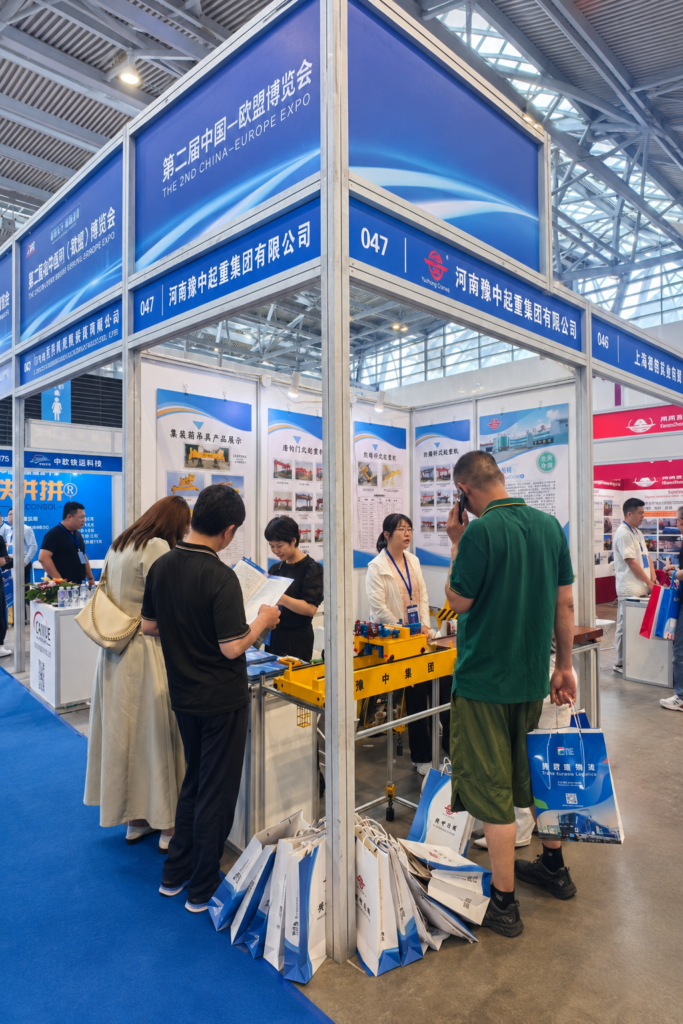
Bottom Line
Figuring out how to import a crane from China boils down to seven steps: nail down your requirements, find and verify manufacturers, compare quotes properly, audit the factory, sort out shipping with the right paperwork, clear customs with a good broker, and plan installation like a pro.
The savings are real — 30–50% versus European alternatives — but they only happen if you do the legwork. The projects that go sideways are the ones where someone skipped the spec detail, the factory verification, or the pre-shipment inspection.
Henan Yuzhong Crane Group makes the whole process straightforward. 48 years of export experience, an English-speaking engineering team, CE/ISO/SGS certifications, installation support in 90+ countries — we handle the heavy lifting so you can focus on your factory. Reach out today for a free quote and spec consultation.
FAQ
1. Is it safe to import cranes from China?
Yes — as long as you work with verified manufacturers who hold international certs (CE, ISO 9001, SGS), do factory audits, and insist on pre-shipment inspection. China produces over 60% of the world’s industrial cranes, and plenty of manufacturers meet or beat European quality standards. The trick is picking the right supplier, not just the cheapest one.
2. How long does it take to import a crane from China?
From order to installation, you’re looking at 4–6 months: manufacturing (30–90 days), sea freight (25–45 days), customs (1–2 weeks), installation (1–4 weeks). Start foundation work before the crane ships and you’ll save real time.
3. What certifications should a Chinese crane manufacturer have?
Minimum: national production license, ISO 9001, CE marking (for EU), and third-party test certs (SGS, TÜV, Bureau Veritas). Extra certs like ISO 14001 and ISO 45001 tell you the company is mature. Yuzhong Crane holds all the major international certifications.
4. What is the best payment term for importing a crane from China?
Industry standard is 30% down, 70% before shipment or against copy of Bill of Lading. Never pay 100% upfront. For big orders, a Letter of Credit (L/C) adds another layer of protection. And don’t release final payment until you’ve seen proof of production and a passing inspection.
5. Can I visit the factory before placing an order?
You should. Good manufacturers want you to come see the operation. Can’t make the trip? Ask for a live video tour. Walk the production floor, check the quality processes, look at the testing equipment, see finished cranes. It’s the single most effective way to know you’re dealing with a real manufacturer.
6. What after-sales support can I expect from Chinese crane manufacturers?
The good ones provide: 12–24 month warranty, remote tech support, on-site engineers for installation and troubleshooting, spare parts shipped within 1–4 weeks, and operator training. Get all of that in your purchase contract before you sign.Yuzhong Crane backs every crane with full after-sales support — fast spare parts dispatch and on-site engineering teams when you need them.